Home ➤ News ➤ 11.05.2026
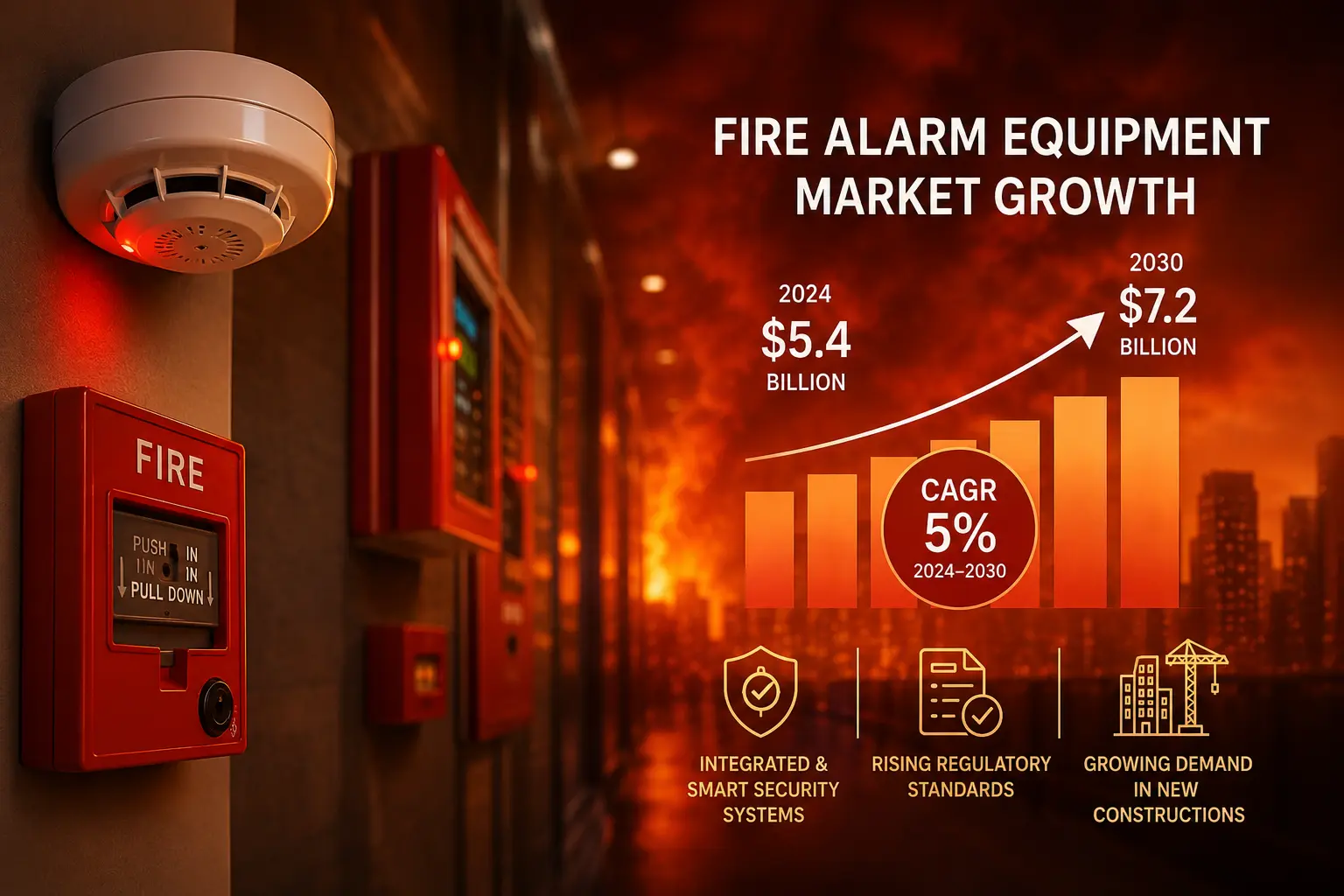
The global fire alarm equipment market was valued at $5.4 billion in 2024 and is expected to reach $7.2 billion by 2030, growing at an annual rate of 5%. Market growth is being driven by smart integrated security systems, stricter regulatory requirements, and increasing demand for modern systems in new construction projects.
Key market opportunities in the fire alarm equipment industry include the integration of IoT (Internet of Things) technologies to deliver smarter systems and real-time data, growing global safety requirements, increased construction activity, and retrofit projects aimed at upgrading outdated systems. This trend is developing particularly rapidly in regions such as China and the United States.

The global fire alarm equipment market was valued at USD 5.4 billion in 2024 and is projected to reach USD 7.2 billion by 2030. The market is expected to register a compound annual growth rate (CAGR) of 5% during the 2024–2030 period. This comprehensive report provides an in-depth analysis of market trends, growth drivers, and forecasts, helping businesses make effective strategic decisions.
Technological advancements have led to the development of smarter and faster-responding fire alarm systems. Modern systems not only detect fires but also accurately identify their location and scale, while integrating with other safety systems to help efficiently manage evacuation and fire suppression processes.
Market growth is being driven by technological advancements, changes in legislation, and updates to industry standards. One of the key factors is the development of integrated solutions that combine fire detection systems with building security and emergency management systems.
Such systems are in high demand for new construction and modernization projects because they provide enhanced safety, cost efficiency, and operational convenience.
Stricter fire safety regulations and requirements for the regular upgrading of existing systems are also contributing to market expansion. In addition, growing consumer awareness of the benefits of modern fire safety systems and a greater willingness to invest in high-quality safety measures are accelerating market development.
Technological innovation is the main driving force behind the development of these systems. The integration of IoT technologies has enabled the creation of “smart” fire alarm systems capable of transmitting real-time data and communicating with other devices.
For example, smart smoke detectors can send alerts to smartphones and operate alongside home automation systems. They can automatically shut down HVAC systems to prevent the spread of smoke and fire.
Advancements in materials science have also made it possible to develop more durable and reliable sensors, reducing the number of false alarms. Artificial intelligence (AI) and machine learning technologies are being used to analyze data collected from multiple sensors in order to predict fire risks in advance. This could fundamentally transform fire safety management in industrial facilities and high-rise buildings.
One of the key factors is the growing global focus on fire safety standards and strict regulations. Governments around the world are updating building codes to require high-standard fire alarm systems in high-risk areas such as schools, hospitals, and high-rise residential buildings.
Increasing construction activity in developing countries is also driving demand for new systems. In addition, upgrading older buildings with modern, compliant fire alarm systems is contributing to market growth.
As urbanization continues to increase, fire safety needs are becoming more complex, creating demand for technological innovations and new solutions.
Key Insights
IoT integration is accelerating market growth.
Urbanization is expanding market opportunities for fire alarm equipment.
Strict fire safety regulations are increasing demand for advanced systems.
Advancements in sensor technologies are driving the adoption of modern systems.
Growing awareness of fire safety is strengthening the need for comprehensive systems.
Smart building projects are boosting demand for intelligent alarm systems.
Wireless fire alarm technologies are expanding the market.
The application of AI and machine learning technologies continues to drive market growth.
Source: globenewswire.com
Tashkent city, Shaykhantakhur district, Kukcha Darvoza street, 10